
What we offer
Four kinds of gas work
Gas work is restricted for good reason. If you are not sure whether a job needs a certifying gasfitter, ask us and we will tell you straight.
Hobs and cooktops
Quoted or hourly
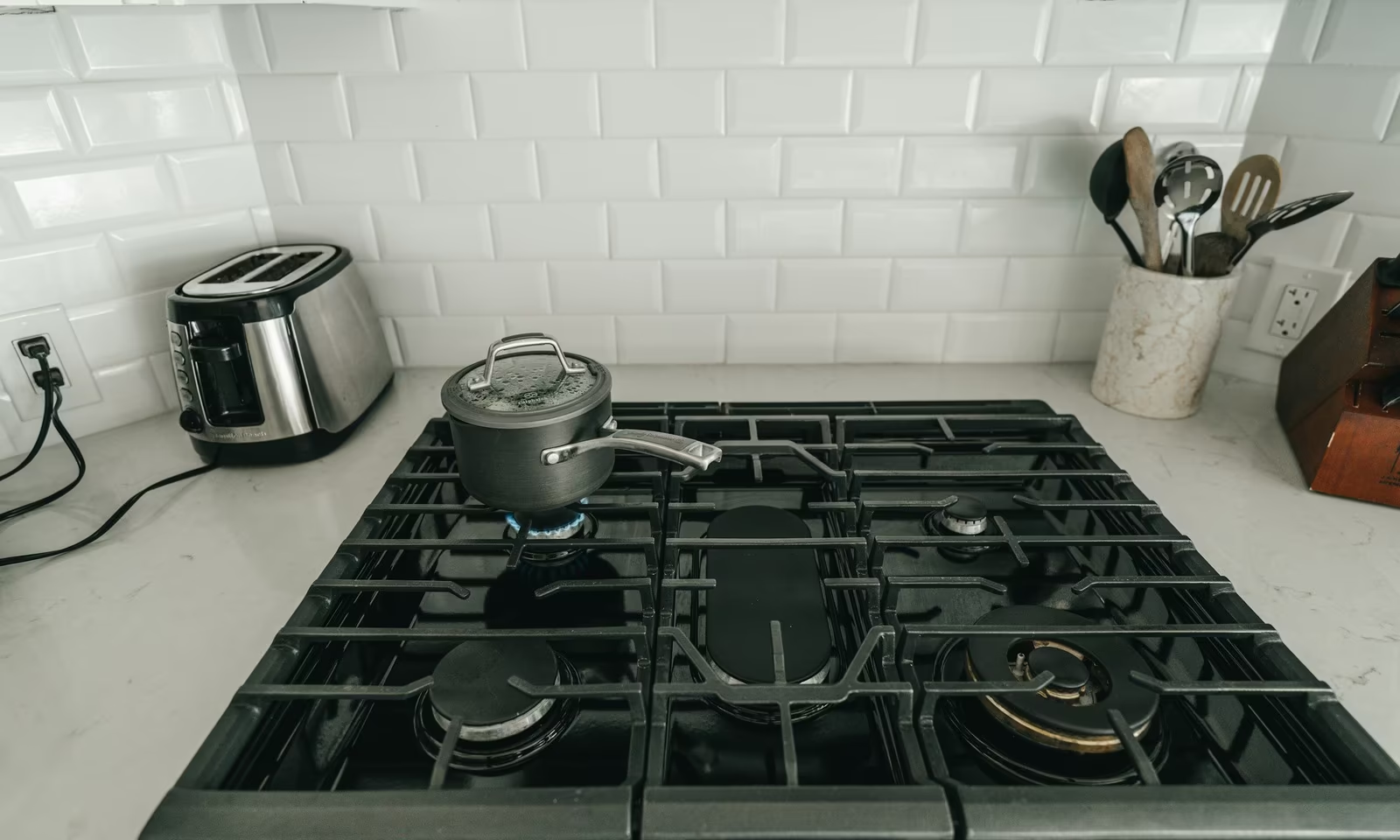
Gas hobs and cooktops installed or replaced, including the pipework, isolation and the certificate on completion.
Califonts and gas hot water
Quoted or hourly
Continuous flow califonts installed, replaced and serviced for both reticulated natural gas and LPG systems. We supply, install and recommend leading New Zealand brands like Rinnai and Rheem. We also handle complete electric-to-gas hot water conversions for strong shower pressure and endless hot water.
Gas heaters
Quoted or hourly
Flued and unflued gas heaters installed and serviced, covering room ventilation, flue clearance and carbon monoxide safety checks.
Bottle installations and pipework
Quoted or hourly
LPG 45kg bottle setups, regulators, and the pipe run from the bottles to the appliance, set out to the required safety clearances. We also carry out pressure testing, gas leak detection and urgent line repairs to keep your home safe.
Gas safety
Three things worth knowing
If you smell gas, do not wait
Turn the bottle or the mains supply off, open the windows, leave the appliances and the light switches alone, and call us. This is emergency work.
Gas work is restricted
Most gasfitting must legally be done by a licensed gasfitter, and the finished work certified. It is not a job for a general handyman, whatever the quote says.
You should get a certificate
A Gas Safety Certificate is your record that the work was done and tested properly. We supply one as a matter of course, not on request.
What it costs
Our gasfitting rates, on the page
Servicing, repairs and fault-finding are charged hourly. Installations, replacements and bottle work can be fully quoted upfront, covering the appliance, pipework and certification, or completed on charge-up, whichever suits your project best.
Price guide
All prices exclude GST
Plumbing and drainlaying labour
Minimum one hour, then 15 minute increments
$95 per hour
Gasfitting labour
Minimum one hour, then 15 minute increments
$110 per hour
1.7-tonne digger and operator
For excavation and drainage work
$115 per hour
3-tonne truck hire
Charged by the day
$250 per day
Travel, Zone 1
Wellington City, Porirua, Lower Hutt
$30 per job
Travel, Zone 2
Wainuiomata, Eastbourne, Upper Hutt, Pukerua Bay, Kapiti Coast
$40 per job
Sundries
Small items such as washers and sealant
$10 to $15 per job
After hours and public holidays
Outside Mon to Fri, 7:30am to 4:30pm. Quoted on the circumstances
Additional charges
Gas Certificate of Compliance (high risk)
Required for new gas installs, commercial work and high-risk setups
$80 per certificate
Gas Safety Certificate (general or low risk)
Required for appliance swaps, replacements and minor extensions
$55 per certificate
Written quotes
For any job, on request
Free
FAQs
Questions we get asked about gas
Can I install a gas hob myself?
No. Connecting any appliance to a gas supply is legally restricted work that must be completed by a licensed gasfitter. Doing gaswork yourself can void your home insurance and carries heavy fines under New Zealand law. You are welcome to buy the unit yourself, and we will handle the pipework, connection, testing and certification.
How long does a gas installation take?
It depends on site access and whether we are connecting to existing pipework. A straightforward, like-for-like swap, such as replacing a hob or califont in the same spot, usually takes a couple of hours. Running new gas lines, converting to LPG bottles, or positioning appliances in a new room can take a full day or more, especially if we need to run pipework under floors or through cavities, or carry out safety pressure tests. We will give you a clear time estimate when we look at the job.
Should I repair or replace an old califont?
Under about ten years old and with parts still available, a repair is usually worth it. Past fifteen, or if it is an older low-efficiency unit, a replacement pays for itself in gas. We will tell you which case you are in.
How often should gas appliances be serviced?
WorkSafe New Zealand recommends having all gas appliances, including flued heaters, califonts and central heating, serviced annually by a licensed gasfitter. Regular servicing checks room ventilation, clears dust build-up, inspects flues and verifies carbon monoxide safety.
A note on unflued heaters: portable LPG cabinet heaters are restricted under NZ gas safety standards and prohibited in bedrooms, bathrooms and small confined spaces. They are also banned in rental properties under the Healthy Homes Standards. If you use an unflued heater in a main living area, annual servicing and good room ventilation are critical.
What is the difference between mains gas and LPG bottles?
Reticulated mains gas (natural gas) is piped underground from the street network, and is available in many urban parts of Wellington City, Porirua and the Hutt Valley. LPG comes from gas bottles installed outside your home with a dual regulator, which is the standard setup across the Kapiti Coast, off-grid locations and rural properties throughout the region. We set up and service both reticulated and bottled systems.
Will my continuous flow califont work during a power outage?
Standard domestic califonts need a small amount of electricity to power the electronic ignition, sensors and safety valves, so they will not run during a power cut unless connected to a backup battery or generator. Older standing pilot light models and specialised battery-ignited units are the exception.
Can I buy my own gas hob or appliance for you to install?
Yes, as long as the appliance is approved for use in New Zealand and carries an official Supplier Declaration of Compliance. We will check the specs on site, complete the pipework, connect the gas, run safety tests and issue your Gas Safety Certificate.
Which gas hot water brands do you supply and service?
We mainly supply, install and recommend Rinnai and Rheem continuous flow califonts, as they offer the best reliability, energy efficiency and spare parts support in New Zealand. We can still service, repair or connect any compliant brand you choose.
What do you need me to do before you arrive?
Clear access to the appliance and to where the bottles or meter sit. If you are replacing an appliance, have the new one on site and the old one emptied and disconnected from power if it is a combination unit.
Related
Other services
Need a gasfitter in Wellington?
Tell us the appliance and where it needs to go, and we will come back with a written quote.